Owner-side role
- Concealed-access strategy and room placement guidance
- Builder, millwork, integrator, and specialty-door coordination
- Access-control, camera, and alert integration planning
- Commissioning, documentation, and operating handoff
Secure access layer
We help owners evaluate concealed mirror doors, hidden doors, armored entries, secure pocket doors, and secure-room access as part of the estate’s broader operating and security system, not as a novelty purchase disconnected from cameras, alarms, travel watch, or project oversight.
Mirror doors, panel doors, and hidden openings that protect privacy and reduce obvious visual targets.
Embassy and Fortress style armored doors, secure pocket doors, and safe-room entries for higher-risk rooms and perimeters.
Door selection tied to cameras, alarm zones, project coordination, and owner-ready operating rules.
Why this matters
On large estates, the door question is rarely only about appearance. It is usually about privacy, secure storage, family protection, staff separation, discreet circulation, or a room that should exist without advertising itself to everyone walking through the property.
That is why we approach concealed and high-security door systems as part of the estate operating plan. The opening itself needs to work architecturally, structurally, and operationally, and it should be coordinated with cameras, access rules, project work, and the owner’s actual use of the space.
Owner-side role
Important note
We do not fabricate the doors ourselves. We help owners evaluate specialist manufacturers and coordinate the concealed-access work so it fits the estate cleanly and performs as part of the larger security layer.
Representative product families
Best when the opening should disappear into a bedroom, dressing area, hallway, gym, or closet wall without advertising itself.
Better suited to secure-room, valuables, or harder-use conditions where concealment and more demanding protection requirements overlap.
Useful where swing clearance is a problem but the opening still needs a stronger security posture, motorized operation, and a protected sliding assembly rather than a decorative hidden panel.
Appropriate when the estate’s design language favors paneling, cabinetry, or library millwork over mirrors.
For overt hardening at a room, suite, or secondary perimeter where concealment is less important than resistance and controlled access.
For projects that need a true room-hardening path with modular steel or ballistic panels, not just a better door leaf.
Armored entry benchmark
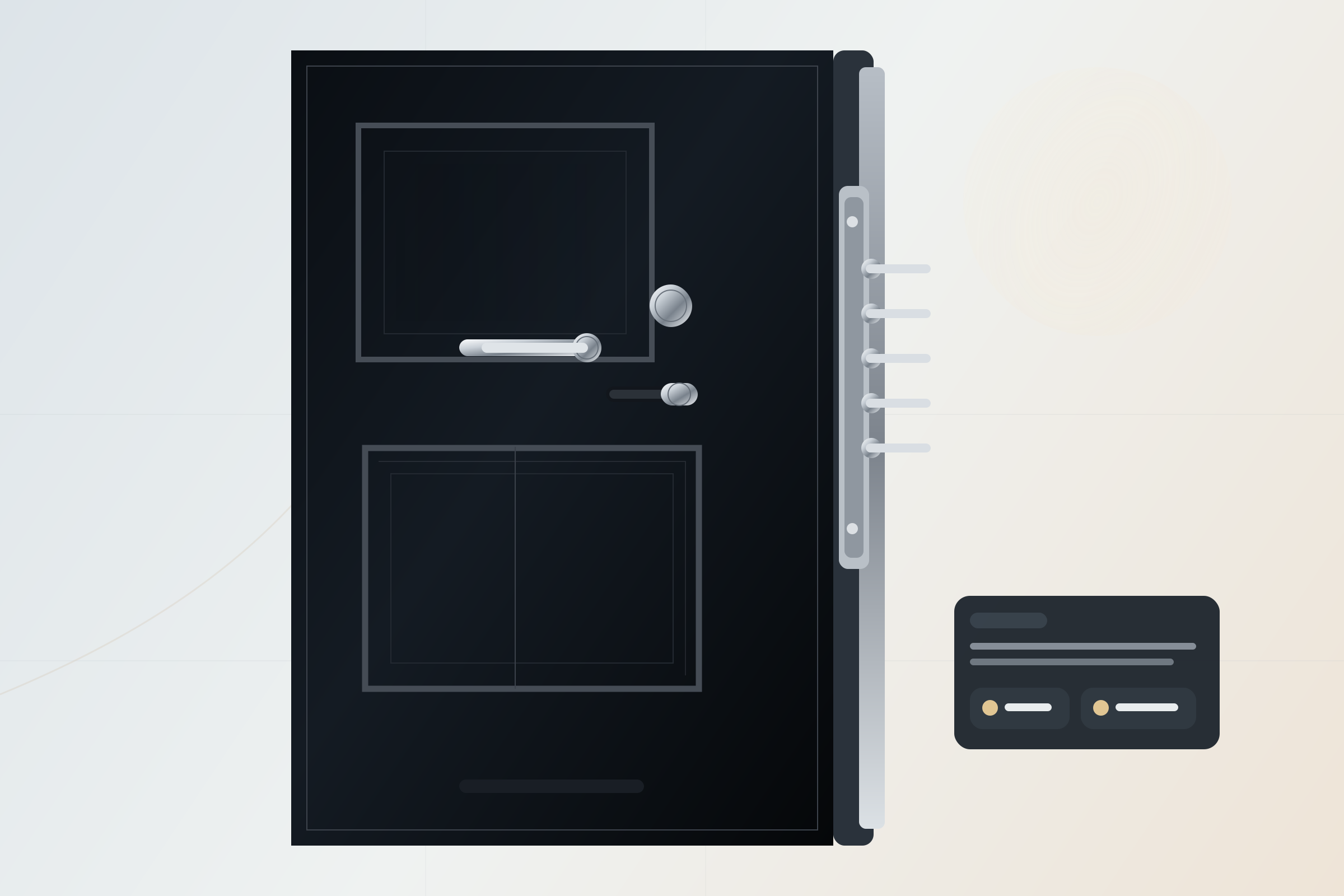
Representative benchmark
A good fit when an estate wants a visibly serious entry at a secure suite, executive office, lower-level access point, or secondary perimeter without jumping immediately to the most expensive ballistic package.
Higher-spec path
Where the brief calls for a harder ballistic and fire-resistance conversation, the Fortress line is the more relevant benchmark. Hidden Door Store currently lists the single-door version from $16,217 and the double-door version from $26,454, with stated lead times around 12 to 14 weeks.
Benchmark 01
For owners who want a visibly hardened opening at a suite, stair hall, or controlled interior perimeter without going straight to the heaviest ballistic package.
Benchmark 02
The cleaner benchmark when the brief is a single hardened opening with stronger ballistic and fire-language for a safe room, owner office, archive room, or secure lower-level access point.
Benchmark 03
The upper end of the visible armored-entry conversation for larger openings where the owner wants the stronger Fortress feature set but still needs a formal double-door condition.
Room hardening path
Some estates do not just need a stronger door. They need the room behind it to be materially harder to penetrate. That is where a modular panel system matters. Hidden Door Store’s Securiwall product is positioned as a room-armoring system that can be mounted over framed or masonry walls, with or without drywall already applied.
Securiwall benchmark
How we use it
The owner-side task is deciding which walls matter, what level of protection is actually appropriate, how the room will be used, what the HVAC / power / monitoring implications are, and how the hardened shell integrates with the rest of the estate.
Pocket-door benchmark
The high-security pocket-door brief is usually about combining concealment, restricted swing space, and a real protective posture in one wall assembly. The reference project you shared points toward an ultra high-security motorized pocket-door concept with a paint-grade finish path and a steel structure designed to install in pieces rather than as one impossible-to-move monolith.
Pocket-door spec profile
Why owners choose it
This category matters when the estate wants a protected opening in a place where a heavy armored swing door would interfere with furniture, circulation, concealment, or the visual calm of the room itself.
These benchmark figures are based on Hidden Door Store’s public product pages for the Armored Embassy Series Double Door, Armored Fortress Series Single Door, Securiwall, and Armored Fortress Series Double Door as reviewed on April 17, 2026. Actual pricing depends on size, swing, cladding, lock package, sensors, ballistic rating, and install conditions.
What the hardware means
The useful distinction is not only “hidden vs. not hidden.” It is whether the opening behaves like a true hardened assembly with multi-point locking, reinforced lock protection, monitored state, and structure that can support the actual load path.
Representative specification items
How we use it
That means deciding whether the opening should report open / closed state to travel watch, whether bolt status should generate an owner alert, whether staff should ever have access, and how emergency release and maintenance are documented after turnover.
Customization
Some of the best estate security work is highly specific to the house. The brief may be a wine-room entrance, a home-theater passage, a private vault approach, a concealed stair, a safe-room door that has to disappear into millwork, or a protected owner corridor that does not want to read like a bunker.
Our role is to turn that idea into a disciplined scope: opening type, room sequence, wall build-up, finish language, access method, monitoring rules, and the right specialty manufacturer or integrator path.
Representative custom scopes
Engineering & install support
Motorized stair systems
A lifting staircase can hide access to a vault, safe room, wine cellar, protected lower level, or restricted staff / owner zone while keeping the visible architecture clean when the system is closed.
Pocket-door category
They are relevant when the protected room sits in a corridor, bedroom suite, dressing room, or compact circulation zone where a heavy swing leaf would compromise use, furniture placement, or the concealment goal.
Disguised service access
In the right project, the opening may be designed to read like a utility panel, mechanical surround, or service enclosure while actually protecting a passage, secure niche, or controlled owner-only access point.
Why this matters
Custom concealed access becomes expensive when it is treated like a last-minute design trick. It performs best when it is planned as part of the estate’s architecture, circulation, and security logic from the start.
Threshold decision
Better when the panel is heavy, the opening will be used often, sound and light control matter, or the owner wants more tolerance for minor floor movement over time.
Better when the estate is prioritizing seamless flooring, stronger visual concealment, and cleaner accessibility, as long as the installation tolerances are tight enough to support it.
We choose the threshold strategy based on use pattern, floor condition, concealment goal, accessibility, and who will actually operate the opening, not just on what looks best in a photo.
What we can do
Representative deliverables
Good fit
This is especially strong for Main Line estates, seasonal Naples homes, and multi-zone residences where secure rooms, owner storage, or hard-to-advertise spaces need both concealment and disciplined oversight.
Frequently asked
No. Sometimes a concealed mirror door is ideal, and sometimes an overt armored entry or secure pocket door is the better match for use, clearance, or security goals.
Usually when continuous flooring, visual concealment, and accessibility are priorities, and the opening can be built with tight enough tolerances to support it.
Yes. That is part of the value. Concealed or hardened access should be coordinated with the estate’s monitoring, alerting, and owner-side operating rules.
No. We act on the owner side, helping specify, coordinate, and integrate the specialty work with the rest of the estate.